Lucas Thomae
A Charlotte-area resident has settled a free speech lawsuit against the City of Monroe and its mayor, whose public comment policy for its City Council meetings she questioned not for what it kept people from saying, but rather what it forced them to.
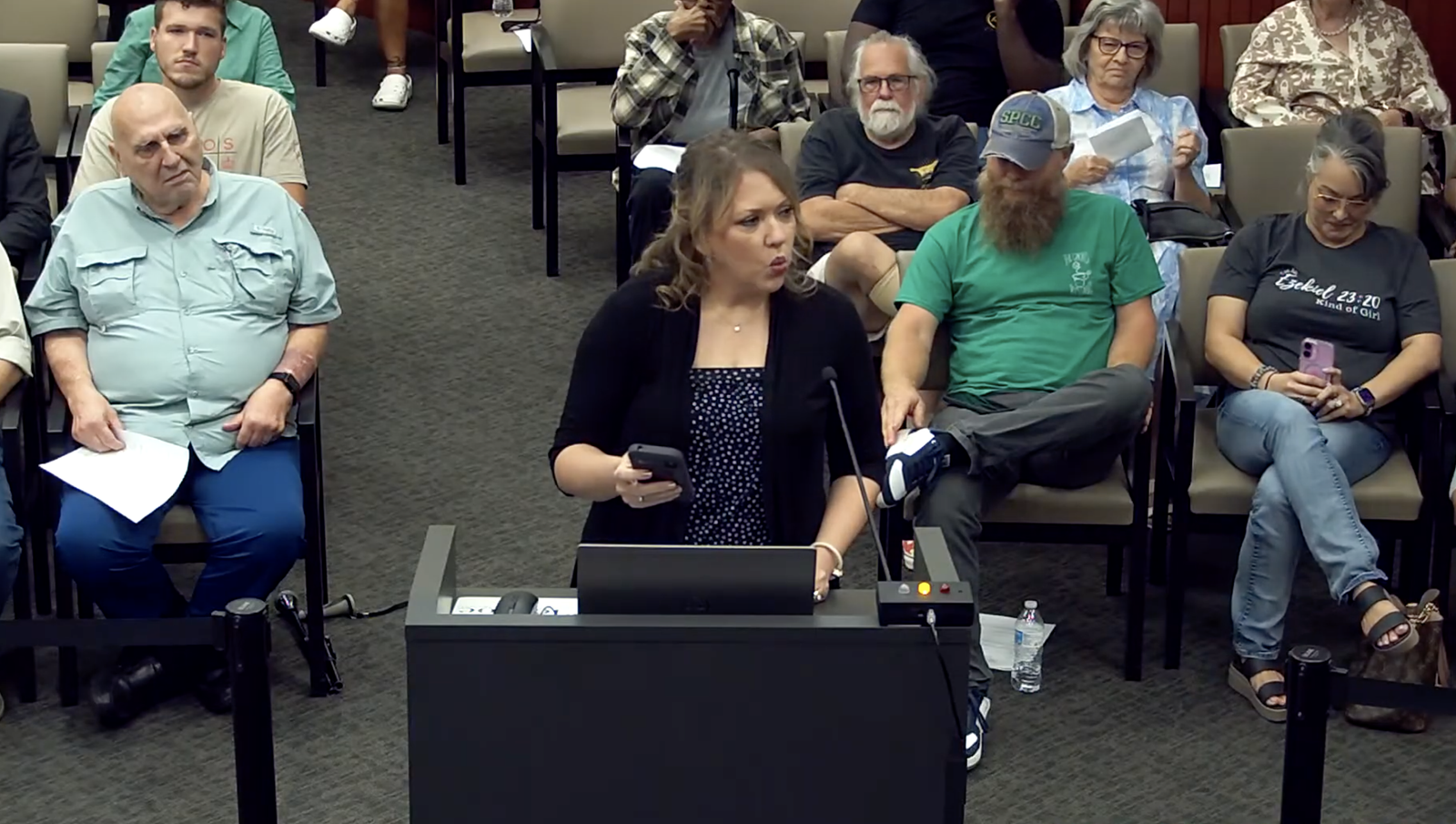 Lisa Metzger sued the city and Mayor Robert Burns in November for making residents state aloud their home addresses before speaking during the public comment session of City Council meetings. Video recordings of those meetings were published to YouTube, and Metzger claimed she and others who spoke at those meetings faced harassment, some of which came in the form of mail sent to her house.
The city didn’t admit liability, but agreed to rescind its requirement that speakers say their full home addresses before commenting. It also must repeal vague decorum rules which prohibited “personal” comments and “public ridicule” of officials.
Ryan Morrison, senior counsel at the Liberty Justice Center and Metzger’s attorney, told Carolina Public Press that the rule requiring speakers to disclose their address “absolutely has a chilling effect on people, which is a First Amendment violation.”
“It is an important area of First Amendment law that’s not developed a lot,” he added, “at least in terms of talking to the city council or school boards or things like that.”
The council began requiring speakers to write their address on the sign-up sheet to participate in the public comment period starting in May 2025, the complaint stated. This was to prioritize speakers who lived in Monroe and Union County.
In July, the council amended its rules to require speakers to say their address out loud before giving their comments. They amended it again in October to clarify the address must be a residential address and not a business one.
The Liberty Justice Center argued that the rule violated participants’ right to free speech by forcing them to self-censor.
Metzger, a resident of Oakboro in neighboring Stanly County, had been attending Monroe City Council meetings to speak out during the public comment period against what she claimed were children participating in or attending local drag performances.
Drag is an artform in which performers embody an exaggerated character using costumes and makeup, most often practiced by dressing up as the opposite sex and singing, dancing or doing comedy routines. It is protected by the First Amendment and generally not obscene to child audiences, according to the Foundation for Individual Rights and Expression.
However, local drag shows have been a hot button issue in Monroe for the past several years, coming to a head in a failed vote by the City Council to classify drag as “adult entertainment,” an action supported at the time by Burns and conservative activists including Metzger.
A majority of the council members rejected the proposal in April of last year, believing it was unnecessary and unfairly targeted certain businesses, local media reported at the time.
If passed, it might have also been a free speech violation.
“Democratically elected government officials cannot violate individuals’ First Amendment rights — full stop,” FIRE’s website states.
“Allowing officials to ban ideas you dislike leaves room for them to also ban ideas that you do like — including the right to protest drag shows and to attend other types of performances that you enjoy but that others may find objectionable.”
Metzger’s complaint against the city didn’t mention drag shows or the content of any of the speakers’ comments. The lawsuit instead broadly focused on the City Council’s public comment rules.
Participants who weren’t parties to the lawsuit and attended City Council meetings to speak on a variety of topics also expressed discomfort with the policy requiring them to verbally state their addresses.
One man who signed up to speak at a July 8 meeting forfeited his time to speak because of the rule. Another woman, protesting the council’s decision to relocate graves at a cemetery where her ancestors were buried, reluctantly gave her address after being told she could not speak without doing so.
“I felt that it would endanger me,” she told the council when asked why she didn’t write her address on the sign-up sheet.
The City Council has since stopped recording the public comment period of its meetings uploaded to YouTube. It’s unclear whether they will resume recording the entirety of the meetings now that speakers are no longer required to state their home addresses.
———–